



If you or someone you love struggles with extreme emotions, a deep fear of being left behind, and relationships that feel like an emotional rollercoaster, you may be reading about borderline personality disorder (BPD) for the first time. This article covers what BPD is, how borderline personality disorder is diagnosed, the most effective ways borderline personality disorder is treated, and where to find help in Texas.
Borderline personality disorder is a serious mental illness that affects roughly 1% to 2% of the U.S. population. Three times as many women as men are diagnosed with BPD, though community studies suggest the actual gender gap may be smaller than clinical numbers show. Despite how common it is, BPD remains widely misunderstood – many people and their family members feel blamed or dismissed instead of supported.
Here is the good news: BPD is treatable, with many individuals showing significant improvement over time with proper care. With the right healthcare provider and consistent support, recovery is not just possible – it is expected. Let’s start with what this condition actually involves.

What Is Borderline Personality Disorder?
Borderline personality disorder is a personality disorder defined by intense, rapidly shifting emotions, a persistent fear of abandonment, and patterns of unstable relationships and an unsteady sense of self. It is sometimes called emotionally unstable personality disorder in older or international classification systems, but the Diagnostic and Statistical Manual of Mental Disorders (DSM-5-TR) uses the term borderline personality disorder.
Unlike a temporary mood disorder or a reaction to a single event, personality disorders involve long-standing patterns that show up across many situations – at work, at home, in friendships – starting in adolescence or early adulthood. The onset of BPD symptoms typically begins in late adolescence or early adulthood, though signs can appear earlier. Research suggests early intervention can meaningfully change the long-term course.
In everyday life, BPD can disrupt a person’s ability to hold a job, maintain friendships, sustain romantic partnerships, and care for themselves consistently. Texas Counseling Center works with teens and adults in Houston, Dallas, and via telehealth who experience borderline personality traits or carry a formal BPD diagnosis.
Signs and Symptoms of Borderline Personality Disorder
Many people experience some of these symptoms at times. The difference is that a person with borderline personality disorder experiences symptoms that are severe, long-lasting, and cause significant distress in their personal life.
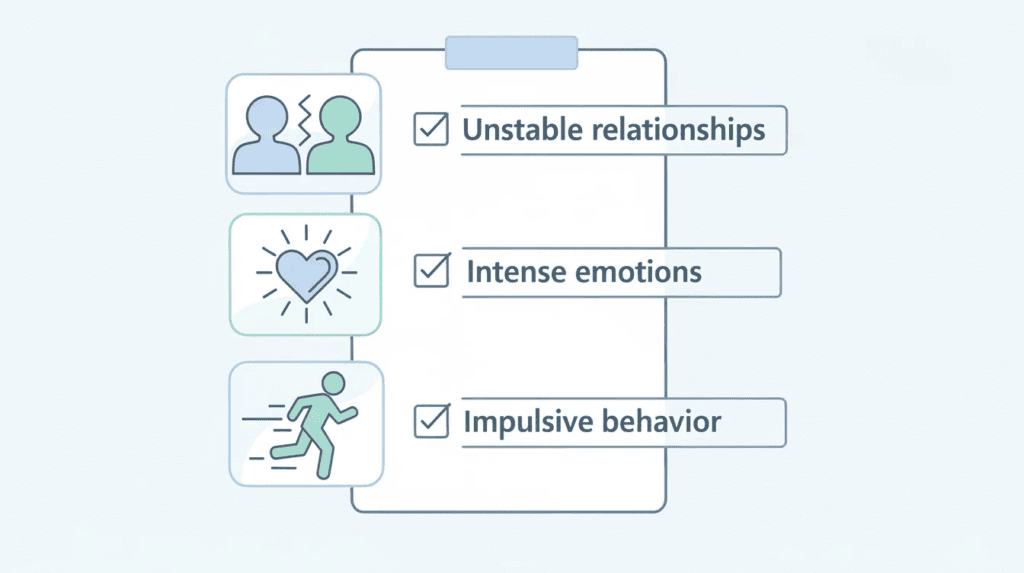
The core symptom areas recognized in the DSM-5-TR include:
- Fear of abandonment – frantic efforts to avoid real or imagined rejection. People with BPD often fear abandonment and experience loneliness.
- Unstable relationships – a pattern of idealizing a partner one day, then suddenly seeing them as cruel after a perceived slight. Individuals with BPD may idealize and then devalue relationships, often resulting in a “love-hate” relationship pattern.
- Identity disturbance – an unstable self-image or sense of who you are.
- Impulsive behaviors – spending sprees, unsafe sex, binge eating, dangerous driving, or drug misuse.
- Self harm or suicidal behavior – recurrent self harming behaviors, gestures, or threats. Suicidal thoughts are significantly higher in people with BPD.
- Intense mood swings – BPD symptoms include severe mood changes over hours or days, sometimes lasting only a few hours before shifting again.
- Chronic emptiness – ongoing feelings of hollowness or boredom that feel impossible to fill.
- Intense anger – inappropriate or hard-to-control anger, sometimes leading to physical fights.
- Stress-related paranoia or dissociation – brief episodes triggered by extreme stress.
People with BPD often have unstable relationships and intense emotions. Self-destructive behaviors are common in individuals with BPD, and BPD can lead to feelings of emptiness and fear of abandonment. People with BPD often experience intense mood swings and uncontrollable emotions that can overwhelm everyday life.
It is worth stating clearly: people with BPD are not “manipulative” by choice. Their symptoms are rooted in intense emotional pain and difficulty self-soothing – not character flaws.
Symptoms often become less intense by the 30s and 40s, especially when borderline personality disorder is treated consistently with structured therapy.
How Is Borderline Personality Disorder Diagnosed?
There is no blood test, brain scan, or lab marker for BPD. Instead, diagnosis relies on a detailed clinical interview and thorough history. A mental health professional – psychiatrist, psychologist, or another licensed clinician – reviews current symptoms, personal and family mental health history, trauma history, and medical background.
Key aspects of the diagnostic process:
- Ruling out conditions with overlapping features, such as bipolar disorder, major depression, post traumatic stress disorder, or substance abuse.
- Co-occurring mental health conditions like anxiety disorders, ADHD, and eating disorders can complicate diagnosis, requiring careful assessment. Texas Counseling Center clinicians can complete thorough evaluations, including ADHD evaluations and adult autism testing, to differentiate overlapping symptoms.
- Borderline personality disorder is usually not diagnosed in a person younger than 18 unless symptoms are severe, persistent for at least one year, and not better explained by normal adolescent development.
Receiving a personality disorder diagnosis can bring mixed emotions – some people feel relief and validation, while others worry about stigma. If you have questions about a BPD diagnosis, ask your provider. Seeking a second opinion is always reasonable.
Causes and Risk Factors
There is no single cause of borderline personality disorder. Instead, it develops through a combination of genetics, brain differences, and environmental factors.
- Genetics: BPD is five times more common with a first-degree relative who has the condition. Genetic factors may contribute to the risk of BPD, though genes increase vulnerability rather than guarantee the disorder.
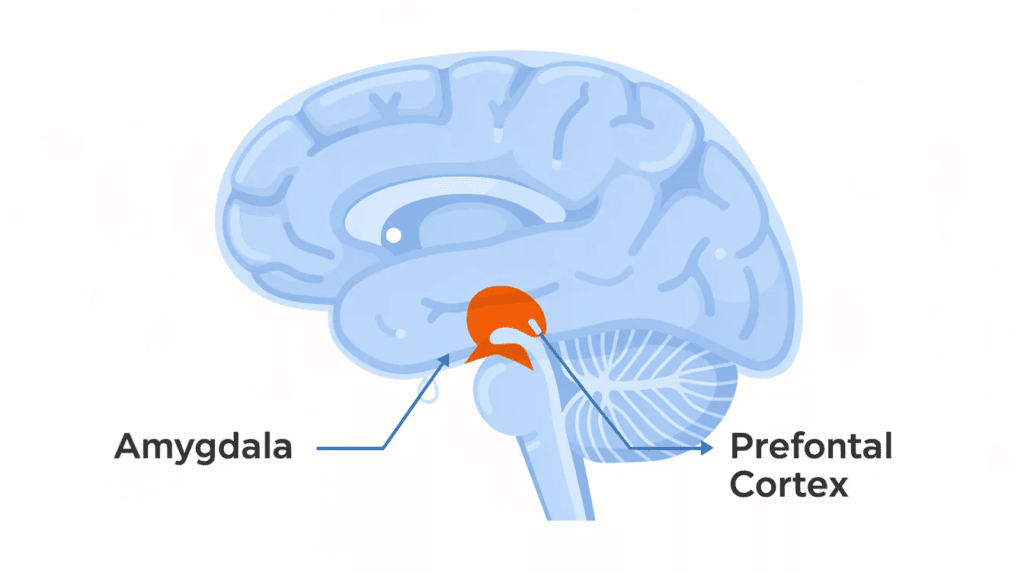
- Brain differences: Neuroimaging research shows differences in emotion and impulse control regions – particularly the amygdala (which processes threat and emotion) and the prefrontal cortex (which helps regulate responses). These findings are still evolving but help explain why a person with BPD may react to situations with extreme emotions that feel disproportionate to others around them.
- Environmental risk factors: Childhood trauma increases the risk of developing borderline personality disorder. Common experiences include physical, emotional, or sexual abuse; neglect; unstable family environments; caregivers with their own mental illness or substance abuse; frequent moves; and unstable relationships modeled at home.
Not everyone who experiences trauma develops borderline personality, and some people with BPD do not recall significant childhood adversity. Having risk factors is not anyone’s fault. Parents or caregivers reading this should focus on early support and treatment rather than self-blame. You cannot fully prevent borderline personality disorder, but early intervention makes a real difference.
Complications and Co‑Occurring Conditions
When left untreated, BPD can create serious complications across nearly every area of life. The good news is that these risks drop significantly when borderline personality disorder is treated.
Common complications include:
- Repeated relationship breakups, with higher risk of divorce and estrangement
- Job loss, school difficulties, and financial or legal problems tied to impulsive behaviors
- Frequent ER visits and hospitalizations
- Unstable housing and disruptions in personal life
BPD can lead to severe emotional pain and unstable relationships. Co-occurring mental disorders are the rule, not the exception. Borderline personality disorder often co-occurs with depression. BPD frequently coexists with anxiety disorders. Substance use disorders are common, as is drug misuse. Eating disorders can also co-occur with borderline personality disorder, and BPD may co-occur with bipolar disorder and other mental health conditions.
The suicide risk is stark: studies estimate that 60–70% of people with BPD attempt self-harm at least once, and approximately 8–10% die by suicide – far above the general population rate. Attempting suicide is a medical emergency that requires immediate intervention.
Evidence-based treatment substantially decreases these risks and improves emotional well being and quality of life.
How Is Borderline Personality Disorder Treated?
Borderline personality disorder is treated primarily with psychotherapy, sometimes combined with medication to treat specific symptoms or other disorders. Recovery is a gradual process, but real improvement is common – research shows at least 50% of people no longer meet full diagnostic criteria within 5–10 years of consistent treatment.
Treatment plans are individualized based on symptom severity, co-occurring health conditions, support systems, and past treatment history.
Psychotherapy for Borderline Personality Disorder
Psychotherapy is the primary treatment for borderline personality disorder. Professional guidelines from the American Psychiatric Association consistently recommend structured, specialized talk therapy over generic counseling approaches.
- Dialectical behavior therapy (DBT): Developed by Marsha Linehan, DBT combines individual therapy, group therapy for skills training, phone coaching, and a therapist consultation team. Dialectical behavior therapy is effective for borderline personality disorder, with strong evidence for reducing self harm, suicidal behavior, and hospitalizations. DBT skills cover mindfulness, emotion regulation, distress tolerance, and interpersonal effectiveness – building systems training for emotional predictability and problem solving.
- Schema-focused therapy: Schema-focused therapy helps change negative self-views in BPD patients by identifying and reshaping deep patterns (schemas) formed in childhood. A 2022 multicenter trial found that combined individual and group schema therapy produced large effect sizes (d ≈ 1.14) compared to standard care.
- Mentalization-based therapy (MBT): Therapies focused on mentalization and emotion regulation can benefit individuals with BPD by strengthening the ability to understand one’s own and others’ mental states.
- Transference-focused psychotherapy (TFP): Uses the therapy relationship itself to address relational patterns.
- Cognitive behavioral therapy (CBT): CBT can help change thoughts and actions that reinforce BPD patterns.
Therapy can be delivered in-person or online. Texas Counseling Center offers DBT-informed therapy, trauma counseling including EMDR, and teen therapy that can integrate BPD-focused skills. Look for therapists experienced with borderline personality disorder who provide a structured, non-judgmental approach.
Medication and Other Supports
Medication is not a first-line treatment for borderline personality disorder. No single medication “cures” BPD. However, psychiatrists may prescribe medications to treat symptoms or co-occurring conditions:
- Antidepressants for depression or anxiety disorders
- Mood stabilizers for impulsivity or mood swings and unstable moods
- Atypical antipsychotics for severe symptoms such as intense anger, paranoia, or brief psychosis
Always discuss risks, benefits, and side effects with your healthcare provider. Never start or stop medications suddenly without guidance.
For severe crises – active suicidal plans or dangerous self destructive behaviors – short-term hospitalization or intensive outpatient programs provide safety and stabilization. Coordinated care between therapists, psychiatrists, and primary care doctors is essential. Supportive services like skills groups, peer support, and family education are also valuable, including for those accessing telehealth therapy across Texas.
Living With Borderline Personality Disorder

Living with BPD can feel exhausting. But you are far more than your diagnosis. Many people with borderline personality disorder experiences learn to build meaningful careers, stable relationships, and fulfilling personal lives once symptoms are better managed.
Practical self-management strategies that help:
- Keep regular therapy appointments – consistency matters more than perfection.
- Track mood and triggers using a journal or mood app.
- Build a daily routine around sleep, meals, movement, and medications.
- Practice effective coping strategies for BPD, including mindfulness practices and distress tolerance techniques at home.
- Limit alcohol, drugs, and other substances that destabilize mood.
- Use grounding techniques during emotional storms.
- Prepare a written crisis plan with coping strategies and emergency contacts.
Support systems and lifestyle strategies are important in managing BPD. Peer groups – online or in-person – offer emotional support and reduce isolation. Stigma is real, but it does not define you. Advocate for yourself in healthcare settings and refuse to internalize negative stereotypes about borderline personality.
Supporting a Family Member or Friend With BPD
If a friend or family member has BPD, you may feel overwhelmed, confused, or even guilty. Those feelings are normal.
Concrete ways to support your loved one:
- Learn about borderline personality disorder so you understand what they face.
- Listen without immediately trying to “fix” their emotions. Validate feelings, even when you cannot agree with behaviors.
- Set healthy boundaries – you can encourage treatment and provide emotional support, but you cannot control another person’s choices.
- Consider family therapy or psychoeducation programs to improve communication and reduce conflict. Texas Counseling Center can involve family members in care through relationship and family counseling.
- Watch for warning signs of suicide or self harm. Talk openly about safety without shaming. If danger is imminent, contact emergency services or call 988.
Take care of yourself, too. Individual therapy, support groups, or stress-reduction practices help prevent burnout and resentment. The National Alliance on Mental Illness (NAMI) offers family support groups across Texas.
When to Seek Help and Crisis Resources
- If you or someone you know is at immediate risk of self harm or suicide, call 988 (Suicide & Crisis Lifeline) or 911. The crisis lifeline at 988lifeline.org provides free, confidential, 24/7 support by phone, text, or chat.
Contact a healthcare provider if you notice:
- Frequent intense mood swings that disrupt everyday life
- Thoughts of self harm or attempting suicide
- Repeated unstable relationships or feeling “out of control” with anger or impulsive behaviors
Start by reaching out to a primary care provider or directly contacting a mental health clinic. Ask specifically for an evaluation for borderline personality disorder and co-occurring mental health conditions. Early treatment helps – patterns are easier to change before they become deeply entrenched. The National Institute of Mental Health provides additional information and treatment resources.
How Texas Counseling Center Can Help
Texas Counseling Center is a Texas-based mental health and psychotherapy clinic serving the greater Houston and Dallas metro areas – and all of Texas via secure telehealth.
Services relevant to borderline personality disorder include:
- Individual therapy for emotion regulation, relationship issues, and impulsive behaviors
- Teen therapy for adolescents showing early BPD traits
- Trauma counseling including EMDR treatment
- Depression and anxiety counseling for co-occurring conditions
- Medication management with psychiatric providers
Whether you suspect borderline personality traits in yourself or want a thorough assessment to understand mood, trauma, ADHD, or autism overlap, our clinicians can help. We accept many major insurance plans and offer guidance on using your benefits.
Ready to Take the Next Step?
Needing help with intense emotions, unstable relationships, or a deep fear of abandonment is not a personal failure – it is a sign that your brain and body need support that you deserve to receive. Borderline personality disorder is among the most treatable mental health conditions when matched with the right care.
Contact Texas Counseling Center to schedule a confidential appointment, ask questions about how borderline personality disorder is diagnosed and treated, or explore therapy options for yourself or a family member. Appointments are available in-person in Houston and Dallas and statewide via secure telehealth.
Take one small step today – call our office or fill out an online request form. You do not have to navigate this alone.
Share