



An estimated 1 in 5 women experience postpartum anxiety after giving birth, yet it remains far less discussed than postpartum depression. Many new parents assume the constant worry, racing thoughts, and heart palpitations are just part of adjusting to life with a new baby. They’re not.
Postpartum anxiety is a real, diagnosable mental health condition marked by excessive worry and fear that goes beyond typical new-parent stress. Symptoms can include intrusive thoughts, panic attacks, sleep disturbances, and physical symptoms like dizziness and nausea. The good news: it is highly treatable through therapy and medication, and getting help early makes a measurable difference.
If you’re a new parent in Texas feeling overwhelmed by anxiety that won’t let up, you’re not alone and you’re not a bad parent. Texas Counseling Center provides in-person support in Houston and Dallas, plus telehealth across the state, specifically for conditions like postpartum anxiety.

What Is Postpartum Anxiety Disorder?
Postpartum anxiety disorder is an anxiety disorder that appears during pregnancy or within 12 months after giving birth. It centers on persistent, excessive worry, nervousness, and fear that feel impossible to control, even when everything around you is objectively fine.
About 17.1% of new parents experience postpartum anxiety, and the condition can include generalized anxiety disorder symptoms, panic attacks, and sometimes postpartum OCD features such as repetitive checking or intrusive mental images focused on the baby. Unlike generalized anxiety disorder in other life stages, postpartum anxiety symptoms tend to revolve around the baby’s health, feeding, breathing, your ability as a parent, finances, and relationship stress.
This is not just “normal new parent worry.” Postpartum anxiety disrupts daily functioning, can interfere with self-care, and can negatively affect the parent-child bond if left untreated. It is a serious mental health condition that deserves the same attention and care as any other medical diagnosis.
Baby Blues vs Postpartum Depression vs Postpartum Anxiety
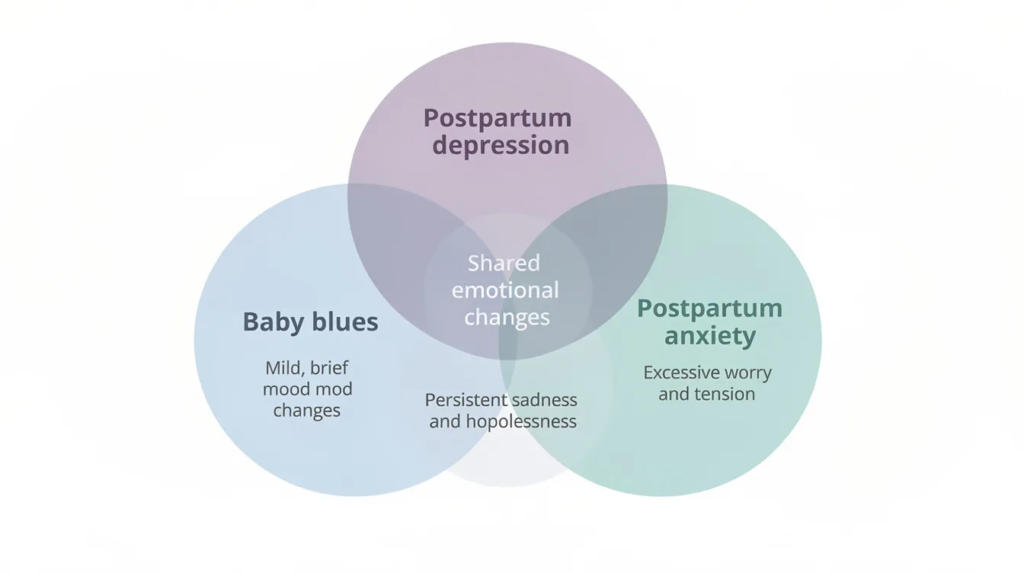
Mood changes after birth are incredibly common. But there’s a significant difference between the temporary emotional rollercoaster of baby blues, the heaviness of postpartum depression, and the relentless worry of postpartum anxiety.
- Baby blues typically start around days 3–5 after delivery. You might feel tearful, have mild mood swings, or feel slightly irritable. These feelings usually resolve on their own within about two weeks. Baby blues are not a disorder and do not require treatment.
- Postpartum depression involves deeper depressive symptoms: persistent feeling sad, hopelessness, loss of interest in things you used to enjoy, low energy, changes in appetite and sleep, and sometimes thoughts of self-harm. Postpartum depression involves feelings of sadness and hopelessness that last longer than two weeks and interfere with daily life.
- Postpartum anxiety is different. The primary features are intense anxiety, constant worry, a constant sense of dread, and trouble relaxing, along with physical symptoms even when the baby is safe and sleeping. Postpartum anxiety can occur alongside postpartum depression, and many women with postpartum depression also experience anxiety symptoms.
If your symptoms last beyond two weeks or feel incredibly overwhelming, that’s the point to contact a healthcare provider.
Common Symptoms of Postpartum Anxiety
Symptoms of postpartum anxiety fall into four categories: physical, emotional, cognitive, and behavioral. Not everyone will experience all of them, and many symptoms overlap. What matters is the pattern: persistent worry, fear, and physical tension that won’t ease up and that interfere with your ability to care for yourself or your baby.
Symptoms of postpartum anxiety include intrusive thoughts and panic attacks, and they often center on the baby’s breathing, feeding, development, and safety.
Physical Symptoms of Postpartum Anxiety
Physical symptoms are often the first things new parents notice because they feel so alarming:
- Racing heart or heart palpitations
- Tight chest or shortness of breath
- Dizziness and nausea
- Stomach aches or digestive upset
- Sweating or shaking
- Headaches
- Trouble sleeping even when the baby is asleep
These physical symptoms are driven by your body’s stress response system. They can mimic other medical conditions, so it’s important to have a medical evaluation to rule out thyroid issues, anemia, or other causes. Many new mothers find that a racing heart or stomach upset appears during quiet moments, like rocking the baby or trying to nap, which can feel confusing.
Emotional Symptoms of Postpartum Anxiety
Emotional symptoms of postpartum anxiety can be just as disruptive as the physical ones:
- Constant worry that something bad is about to happen
- Irritability or postnatal rage
- Guilt or shame about not feeling “happy enough”
- Feeling overwhelmed by household chores or small tasks
- A persistent sense of dread
- Feeling on edge, unable to relax even when family members offer help
Some parents feel disconnected from their old selves or feel anxious all day without being able to pinpoint why. These emotional symptoms are signs of a treatable condition, not personal weakness.
Cognitive Symptoms of Postpartum Anxiety
The cognitive side of postpartum anxiety can be the most frightening:
- Racing thoughts and difficulty concentrating
- Intrusive thoughts or scary thoughts of harm coming to the baby (e.g., the baby might stop breathing, choke, or fall)
- Unwanted thoughts or mental images that feel graphic or disturbing
- “What if” loops that replay negative thoughts over and over
- Trouble making simple decisions
Postpartum anxiety can cause intrusive thoughts about harming the baby. These are unwanted thoughts, and intrusive thoughts during postpartum anxiety do not indicate the desire to act on them. Reassurance from others does not typically alleviate the fear of postpartum anxiety; the anxious thoughts simply return. If you’re experiencing repetitive checking, counting, or mental rituals, these may be signs of postpartum OCD, which is closely related to obsessive compulsive disorder, and important to bring up with a mental health professional.
Behavioral Symptoms of Postpartum Anxiety
Postpartum anxiety can lead to avoidant behaviors and compulsive checking that go beyond normal caution:
- Difficulty leaving the baby with anyone else, even trusted family members
- Repeatedly checking the baby’s breathing throughout the night
- Over-monitoring feeds, worrying about enough milk
- Being overly cautious about every aspect of the baby’s environment
- Avoiding social events, doctor visits, or leaving the house
- Constantly searching symptoms online
- Trouble sitting still or relaxing
These behavioral symptoms are driven by fear, not preference. Many women experience these patterns and feel trapped by them. If you find yourself unable to spend time away from your baby without intense anxiety or feel anxious leaving your new baby with your partner, these patterns deserve attention.
How Long Do Postpartum Anxiety Symptoms Last?
Postpartum anxiety can emerge any time within the first year after childbirth. Some parents feel anxious within the first few days of the postpartum period, while others notice symptoms developing months later.
Without intervention, symptoms of postpartum anxiety persist for weeks or months. Some people experience symptoms that linger well beyond the first year, especially if risk factors like a personal or family history of anxiety are present. Sleep deprivation, lack of support, and unresolved birth trauma can extend the timeline.
With effective treatment, including cognitive behavioral therapy CBT, medication, or a combination, many parents notice meaningful improvement within weeks to a few months. Earlier support generally leads to a faster and more complete recovery.
Causes and Risk Factors for Postpartum Anxiety
There is no single cause. Developing postpartum anxiety usually involves several factors working together:
- Hormonal shifts after delivery (drops in estrogen, progesterone, and neurosteroids)
- Sleep deprivation and exhaustion from caring for a newborn
- Birth trauma or medical complications (emergency C-section, NICU stay)
- Lack of social support or feeling isolated
- Financial stress or job insecurity
- Health history including previous anxiety or depression
Specific risk factors that increase vulnerability include a personal or family history of any anxiety disorder or depression, previous postpartum anxiety or postpartum depression, high perfectionism, and chronic medical conditions. Partners can also develop postpartum anxiety under the weight of new stress and responsibility.
Having risk factors does not mean postpartum anxiety is inevitable. Understanding them can help you and your provider plan early support and trigger anxiety prevention strategies.
When Is Postpartum Anxiety an Emergency?
While postpartum anxiety is common and treatable, certain symptoms require immediate help:
- Thoughts of harming yourself
- Thoughts of harming the baby
- Feeling completely unable to care for yourself or the baby
- Confusion, hallucinations, or hearing voices
- Extreme agitation or delusional beliefs
If you or someone you know is experiencing these signs, call 988 (Suicide & Crisis Lifeline) or 911 immediately. Go to the nearest emergency room if there is immediate danger.
Postpartum psychosis is rare but serious and may emerge within days or weeks of birth. Rapid medical attention is essential. Asking for emergency help is an act of protection and love for yourself and your child, not a failure.
Diagnosis: When to Talk to a Healthcare or Mental Health Professional
If you suspect postpartum anxiety, talk with your OB-GYN, midwife, pediatrician, or a mental health professional. Contacting a healthcare professional is important if anxiety interferes with daily life, and you don’t need to wait until things feel unbearable.
Seek help if your symptoms:
- Last longer than 2 weeks
- Interfere with sleep, feeding, bonding, or daily tasks
- Cause intense distress or feel anxious most of the day
Clinicians typically ask about your thoughts, physical symptoms, daily functioning, and health history, including any family history of anxiety or depression. Screening tools like the GAD-7 may be used, but ACOG guidelines recommend routine anxiety screening during the postpartum period. Many parents are under-screened, so self-advocacy matters.
Texas Counseling Center offers evaluations for anxiety and related conditions both in-person in Houston and Dallas and via telehealth across Texas.
Treatment Options for Postpartum Anxiety
Postpartum anxiety is highly treatable through therapy and medication. Effective treatment often combines multiple approaches depending on symptom severity, breastfeeding status, medical history, and personal preference.
Don’t wait for symptoms to become “severe enough.” Early intervention can prevent worsening and protect your well being and your baby’s development.
Therapy and Cognitive Behavioral Therapy (CBT)
Cognitive behavioral therapy CBT is a structured, short-term therapy that helps you identify anxious thoughts, challenge distortions, and change unhelpful behaviors. For postpartum anxiety, CBT might target specific fears, such as worrying the baby will stop breathing, fear of driving with the baby, or difficulty leaving the baby with others.
Cognitive behavioral therapy (CBT) effectively treats postpartum anxiety, including panic attacks and postpartum OCD symptoms. Research shows internet-delivered CBT produces a moderate effect size (d ≈ 0.65) for anxiety symptom reduction, which means it works well even in remote formats.
Other therapy modalities can also support recovery. EMDR therapy is effective for processing birth trauma or medical trauma. Interpersonal therapy helps when relationship stress is a major factor. Trauma counseling addresses experiences like emergency deliveries or NICU stays that can trigger anxiety.
Texas Counseling Center offers depression and anxiety counseling, EMDR, and support for partners and teens adjusting to family changes.

Medication for Postpartum Anxiety
Medication can be an important part of treatment for moderate to severe postpartum anxiety symptoms. SSRIs are the first-line medications for postpartum anxiety and often work best when combined with therapy. Therapy combined with medication is more effective than either alone.
Benzodiazepines may sometimes be prescribed for short-term relief while waiting for SSRIs to take effect, but they carry risks of sedation and dependency. Zuranolone is a new medication for postpartum anxiety treatment that shows early promise for both depressive symptoms and anxiety, though long-term data is still limited.
All psychiatric medications can pass into breast milk during breastfeeding, so decisions should weigh symptom severity, medication history, and infant factors with a knowledgeable prescriber. At Texas Counseling Center, licensed prescribers collaborate with therapists and OB-GYNs to create safe, coordinated plans.
Lifestyle Strategies: Sleep, Nutrition, and Physical Activity
Lifestyle changes alone may not cure a postpartum anxiety disorder, but they can significantly reduce anxiety symptoms and support other treatments.
- Sleep: Share night duties with a partner, pump or use formula for one overnight feed, nap when the baby naps. Even one protected block of sleep deprivation-free rest per night can help. Trouble sleeping is common with postpartum anxiety, so addressing it directly matters.
- Nutrition: Keep high-protein snacks handy, prepare healthy meals when possible, accept help with cooking, and stay hydrated. Healthy nutrition supports mental health and reduces anxiety symptoms through the gut-brain connection.
- Physical activity: Even 10–20 minutes of gentle movement decreases stress and anxiety symptoms. Try stroller walks, stretching, or practicing yoga with baby-and-me classes. Physical activity releases feel-good chemicals in the brain.
Set small, sustainable goals. The postpartum period is demanding enough without perfectionism.

Additional Support: Relationships, Groups, and Community
Social and practical support is a powerful buffer against postpartum anxiety symptoms. New parents who feel isolated tend to experience symptoms more intensely.
- Partner involvement in baby care and household chores
- Help from family members or trusted friends
- Postpartum doulas
- Online or in-person support groups (joining support groups can alleviate feelings of isolation for new parents)
- Relationship counseling when partnership strain is adding to anxiety
- Faith or cultural communities
Building a support network doesn’t mean you’re failing. It means you’re creating conditions for your family to thrive. Texas Counseling Center can connect you with local resources and teen therapy for older siblings who may be struggling with the adjustment.
Everyday Coping Skills You Can Start Today
Small daily coping strategies can reduce anxiety intensity and make formal treatment more effective. You don’t need a quiet room or an hour of free time. These work in the middle of real life with a new baby.
- Grounding (5-4-3-2-1): Name 5 things you see, 4 you can touch, 3 you hear, 2 you smell, 1 you taste. You can do this while feeding or holding the baby.
- Breathwork: Inhale for 4 counts, exhale for 6. Slowing the exhale activates your calming nervous system. Mindfulness practices can help manage postpartum anxiety effectively when used consistently.
- Micro-mindfulness: Pay full attention to one diaper change or one feeding without multitasking or judging.
- Journaling: Use a notes app to track triggers, anxiety symptoms, sleep, and moments of relief. Share this with your therapist.
- Reduce overstimulation: Dim lights, pause social media scrolling, and limit background noise during high-anxiety times.
These are not replacements for professional help, but they can take the edge off negative thoughts while you build your treatment plan.

How Texas Counseling Center Supports Parents with Postpartum Anxiety
Texas Counseling Center is a Texas-based mental health practice serving Houston, Dallas, and the entire state via telehealth. The team has direct experience treating anxiety, depression, trauma, and family adjustment challenges.
Services relevant to postpartum anxiety include:
- Individual therapy, including CBT
- EMDR therapy for birth or medical trauma
- Medication management with licensed prescribers
- Relationship and marital therapy
- Teen therapy for older siblings adjusting to a new baby
The clinic coordinates with OB-GYNs, pediatricians, and primary care providers for integrated care. Both in-person and secure online appointments are available, which can be especially helpful when you’re managing childcare and limited time.
Share