



Giving birth changes everything. Alongside the excitement and love, many new parents encounter emotional struggles they never expected. For some, those struggles go far beyond ordinary exhaustion or adjustment. They become postpartum depression.
Postpartum depression is not a personal failure. It is not caused by something you did or did not do. It is a medical condition rooted in hormonal and physical changes, personal history, and the enormous demands of caring for a new baby. Up to 1 in 7 women develop postpartum depression after childbirth, and the actual number may be higher, since about 60% of women with PPD go undiagnosed in the United States.
In this guide, you will learn to recognize symptoms of postpartum depression, understand the risk factors, explore treatment options including interpersonal therapy and medication, and find out how Texas Counseling Center provides local and telehealth support for parents in Texas.

What Is Postpartum Depression?
Postpartum depression, sometimes called postnatal depression, is a mood disorder that can develop anytime during pregnancy or within the first year after giving birth. The American Psychiatric Association classifies it as major depressive disorder with peripartum onset in the Diagnostic and Statistical Manual of mental disorders.
PPD can affect anyone who has recently had a baby. That includes biological mothers, adoptive parents, and non-birthing partners. It is not limited by age, income, or background.
The condition involves emotional, physical, and behavioral changes that interfere with daily tasks, bonding with the new baby, and overall functioning. Symptoms of postpartum depression can begin up to one year postpartum, which surprises many parents who assume they are “out of the woods” after the first few weeks.
PPD is more than the normal tiredness and stress that come with adjusting to life with a newborn. It is persistent, often worsening rather than improving on its own, and it requires appropriate treatment.
Baby Blues vs. Postpartum Depression
Within the first few days of giving birth, up to 80% of new mothers experience what is commonly called the baby blues or postpartum blues. These feelings are extremely common, and in most cases, they resolve on their own.
Here is how baby blues differ from postpartum depression:
- Onset: Baby blues typically appear within 2–3 days after delivery. PPD can surface days, weeks, or months later.
- Duration: Baby blues usually fade within about two weeks. Postpartum depressive symptoms persist beyond that window and can last several months or longer.
- Intensity: Baby blues involve mild mood swings, tearfulness, and irritability. PPD brings more intense symptoms like extreme sadness, hopelessness, and difficulty functioning.
- Impact on functioning: Baby blues do not usually prevent you from caring for yourself or your baby. Postpartum depression can make it difficult to complete everyday tasks, bond with your infant, or feel any pleasure at all.
If your symptoms last longer than two weeks, grow worse, or make it hard to care for yourself or your baby, what you are experiencing is likely not just the blues. It may be postpartum depression, and it deserves attention.
Postpartum Depression Symptoms
Symptoms of postpartum depression can appear days, weeks, or even months after childbirth. They often build gradually, which is why many parents do not recognize what is happening until the symptoms are well established.
Emotional Symptoms
- Persistent sadness or a depressed mood that does not lift
- Feelings of hopelessness, worthlessness, or excessive guilt
- Frequent crying spells, sometimes without a clear reason
- Emotional numbness or feeling disconnected from yourself and others
- Little or no interest in activities you used to enjoy
Anxiety-Related Symptoms
- Racing thoughts or constant worry about the baby’s health and safety
- Panic attacks or a persistent feeling of being “on edge”
- Obsessive fears about something bad happening to the baby
Physical and Behavioral Symptoms
Physical changes associated with postpartum depression include overwhelming fatigue and sleep disturbances that go beyond normal sleep deprivation. Other signs include:
- Appetite changes (eating far more or far less than usual)
- Trouble sleeping even when the baby is asleep, or sleeping excessively
- Difficulty concentrating or making decisions
- Withdrawing from family members, friends, and social activities
- Frequent headaches, stomach problems, or muscle pain without a clear medical cause
Serious Warning Signs
Common symptoms of postpartum depression include persistent sadness and severe mood swings, but some signs demand urgent attention:
- Thoughts of harming yourself or the baby
- Feeling that your family would be better off without you
- Baby recurrent thoughts of death or suicide
- Extreme confusion, agitation, or paranoia
Thoughts of harming oneself or the baby require immediate medical assistance. If you or someone you know is experiencing these, call 911 or the 988 Suicide and Crisis Lifeline immediately.
How Postpartum Depression Feels Day to Day
Imagine waking up feeling as if you are buried under a weight you cannot name. The baby is crying, and instead of responding with instinct, you feel paralyzed. You go through the motions of feeding, changing, and soothing, but it feels like you are watching yourself from outside your own body.
Here are some scenarios that many parents experiencing postpartum depression describe:
- Dreading nighttime feedings, not because of the lost sleep, but because the silence and darkness amplify the sadness
- Crying in the shower because it is the only place that feels private enough
- Feeling numb when friends and family members visit and gush over the new baby
- Struggling to eat or to remember when you last ate a full meal
- Staring at your phone but being unable to focus enough to respond to a text
Many people with PPD feel deep shame because “this is supposed to be a happy time.” Many women feel ashamed to admit experiencing postpartum depression, and stigma often prevents women from seeking help for PPD. But this reaction does not make you a bad parent. It makes you someone dealing with a real medical condition.
Recognizing these patterns early is one of the most important steps you can take. The sooner you acknowledge what is happening, the sooner you can seek treatment and start feeling more like yourself.

Postpartum Psychosis: A Medical Emergency
Postpartum psychosis is a rare but severe mood disorder that is distinct from postpartum depression. It occurs in about 1 in 1,000 births and is considered a psychiatric emergency.
Hallmark symptoms include:
- Hallucinations (seeing or hearing things that are not there)
- Delusions (e.g., believing the baby is in danger or that the baby is evil)
- Extreme confusion and disorientation
- Rapid and severe mood swings between mania and depression
- Agitation, restlessness, or disorganized behavior
Postpartum psychosis usually appears within the first days to two weeks after delivery. Women with a history of bipolar disorder or a previous episode of postpartum psychosis face the highest risk. Without immediate treatment, there is serious danger of suicide or harm to the baby.
If you or someone you know is showing signs of postpartum psychosis, call 911 or go to the nearest emergency room immediately. This condition is treatable with hospital-based care, medication (antipsychotics, mood stabilizers), and close monitoring.
Consequences for Parent, Baby, and Family
Ignoring prolonged postpartum depression symptoms has consequences that extend well beyond the parent’s own suffering.
Impact on the Parent
Untreated postpartum depression can spiral into chronic major depression, worsening physical health, increased risk of substance use, and lasting damage to self-confidence and identity. It can also affect breast milk production and breastfeeding, creating additional guilt and stress for a new mother.
Impact on the Baby
Children of mothers with PPD face long-term developmental issues. Research shows that infants of mothers with PPD may have sleeping difficulties, more frequent crying, and feeding problems. Infant-specific concerns in postpartum depression may include bonding difficulties and excessive worry about the baby’s health, both of which can undermine the emotional attachment that supports healthy development.
Over time, children of parents with untreated PPD may show higher rates of emotional and behavioral problems during childhood and adolescence.
Impact on the Family
PPD can lead to family relationship problems. Partners may feel shut out, confused, or resentful. Siblings may act out in response to the tension. Financial and work-related stress compounds everything. The isolation that often accompanies PPD can sever connections with extended family and friends at exactly the time when support matters most.
Postpartum Depression in Fathers and Partners
Paternal postpartum depression is real, and it is more common than most people think. It affects an estimated 8 to 10% of fathers, with some research suggesting rates as high as 13%. When the birthing parent also has PPD, the non-birthing partner’s risk can climb to nearly 50%.
Symptoms in fathers and non-birthing partners often look different from what we typically associate with depression:
- Intense irritability or anger
- Withdrawal from the family or the baby
- Increased alcohol or substance use
- Throwing themselves into work to avoid being home
- Feelings of failure, uselessness, or inadequacy
- Classic signs like depressed mood, trouble sleeping, and loss of interest
Paternal PPD tends to peak around 3–6 months after the baby is born. It can directly affect infant bonding, child development, and the overall stability of the family.
Texas Counseling Center welcomes fathers and non-birthing partners to seek individual or couples counseling to address postpartum depression together, rather than struggling alone.

Special Considerations for LGBTQ+ Parents
LGBTQ+ parents face unique stressors during the transition to parenthood. While research on PPD in this population is still growing, the existing evidence suggests higher rates of prenatal anxiety and depression among LGBTQ+ individuals.
Key factors that may increase vulnerability include:
- Stigma and discrimination from healthcare systems and communities
- Limited family support or estrangement from family of origin
- Fear of judgment, loss of custody, or being questioned as a “real” parent
- Lack of culturally competent mental health providers who understand LGBTQ+ family structures
Biological risk factors like hormonal shifts and family history of depression still apply. But they are layered with social determinants – income disparities, racial discrimination, community acceptance – that shape how depression develops and whether someone seeks help. Cultural beliefs can discourage help-seeking for postpartum depression, and this is compounded for parents who already feel marginalized.
Texas Counseling Center strives to provide affirming, inclusive care for LGBTQ+ parents via both in-person and telehealth services across Texas.
Risk Factors for Postpartum Depression
No one chooses to develop postpartum depression. But certain risk factors make it more likely. Understanding them is not about assigning blame. It is about awareness and early action.
Personal and Family History
- A personal or family history of depression, anxiety, or other mental health conditions
- Previous postpartum depression or perinatal depression
- History of bipolar disorder or other mental disorders
- Past trauma, including childhood abuse or sexual violence
- Family history of depression, especially in a parent or sibling
Women with a history of depression are at higher risk for postpartum depression. If you have a history of depression, inform your healthcare provider early in pregnancy.
Pregnancy and Birth-Related Factors
- Traumatic birth experience (emergency C-section, complications, prolonged labor)
- Baby requiring NICU care
- Multiple births (twins, triplets)
- Medical complications for mother or baby during pregnancy or delivery
- An unwanted pregnancy or ambivalence about becoming a parent
Social and Environmental Factors
- Low income or financial instability – low-income women have a higher risk of developing postpartum depression
- Relationship conflict or lack of support from a partner
- Single parenting
- Minimal social support network
- Recent stressful life events such as job loss, bereavement, or relocation
- Recent immigration or migration stress
Lifestyle Factors
- Sleep deprivation (chronic, beyond what is expected with a newborn)
- Poor nutrition
- Substance use
- Social isolation or excessive social media comparison
People without any obvious risk factors can still develop PPD. Having increased risk does not guarantee you will experience it, and having no risk factors does not make you immune.
How Postpartum Depression Is Diagnosed
Only a qualified mental health professional or healthcare provider can diagnose postpartum depression. Self-diagnosis through internet searches is not a substitute for a proper evaluation, although reading articles like this one can help you recognize when something feels wrong.
Screening Tools
The most widely used tool is the Edinburgh Postnatal Depression Scale (EPDS), a brief self-report questionnaire used by OB/GYNs, pediatricians, and mental health clinicians. Other common instruments include the Patient Health Questionnaire (PHQ-9) for depression screening and the GAD-7 for anxiety.
What an Evaluation Looks Like
At a clinic like Texas Counseling Center, a typical evaluation includes:
- Reviewing your emotional and physical symptoms
- Gathering your medical and psychiatric history
- Discussing your support system and emotional factors at home
- Assessing current medications and breastfeeding status
- Evaluating safety concerns for you and the baby
Being honest about your thoughts and feelings, including the scary ones, helps professionals choose the safest and most effective treatment plan. About 60% of women with PPD go undiagnosed in the U.S., often because they minimize their symptoms or fear judgment. Your honesty during a depression screening can change the course of your recovery.
Treatment: How Is Postpartum Depression Treated?
Postpartum depression is treatable through psychotherapy, medication, or a combination of both. The majority of parents who receive appropriate treatment begin to feel better within weeks.
Treatment plans are individualized. Your mental health provider will consider the severity of your symptoms, whether you are breastfeeding, your medical history, your personal preferences, and what lifestyle factors may be contributing. There is no single “right” approach – what matters is finding what works for you.
The major components of treatment include:
- Psychotherapy (talk therapy) – the foundation for most treatment plans
- Medication – when symptoms are moderate to severe
- Lifestyle and social support changes – practical strategies that reinforce clinical treatment
- Group therapy, support groups, or family or couples therapy – when connection and communication are part of the healing process
Counseling and medication are effective treatments for postpartum depression, and Texas Counseling Center offers therapy for depression and anxiety, medication management, and telehealth options for postpartum parents across Texas.
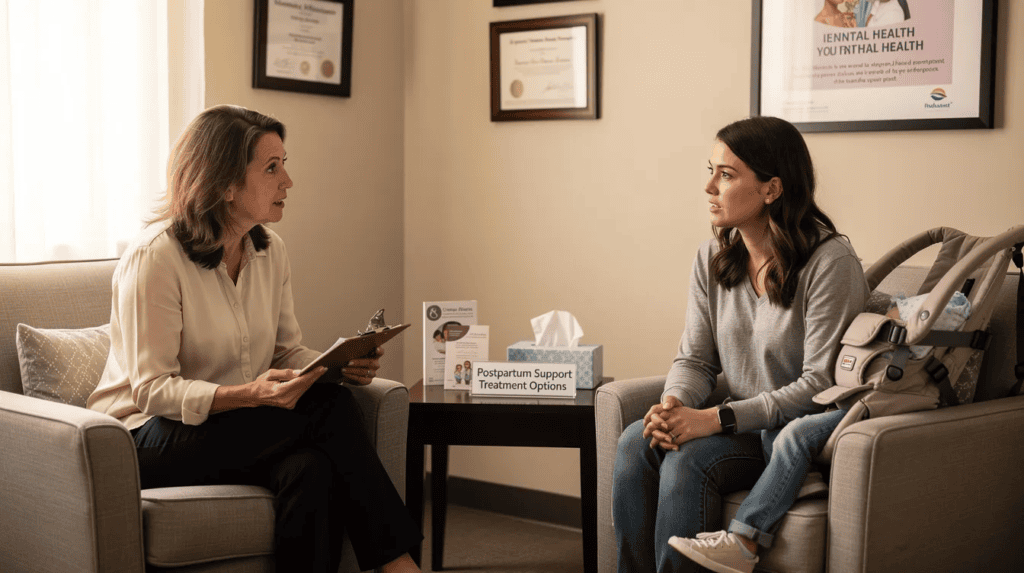
Psychotherapy Options (Including Interpersonal Therapy)
Therapy provides a safe, structured space to process the emotional weight of postpartum depression and develop practical coping skills. It is not about someone telling you what to do. It is about working with a trained professional to understand what you are feeling and why, and to chart a path forward.
Interpersonal Therapy (IPT)
Interpersonal therapy is effective for postpartum depression treatment. It focuses on the major life transition of becoming a parent, addresses grief or loss (including the loss of your pre-baby identity), and helps improve communication and support in your closest relationships. IPT is one of the most well-studied approaches for perinatal depression.
Cognitive Behavioral Therapy (CBT)
CBT helps you identify and challenge negative thought patterns – like “I’m a terrible parent” or “I should be able to handle this” – and replace them with more realistic, compassionate perspectives. It also includes behavior activation, which means rebuilding daily routines and activities that bring you a sense of accomplishment or pleasure.
Trauma-Informed Therapy and EMDR
For parents who experienced a traumatic birth, emergency delivery, or NICU stay, trauma-informed approaches can address the intrusive memories and hypervigilance that fuel depression and anxiety. Texas Counseling Center clinicians use approaches including CBT, IPT, trauma-informed therapy, and EMDR treatment when birth-related trauma is a factor.
Medication and Other Medical Treatments
For moderate to severe postpartum depression, medication is often a safe and effective part of the treatment plan. The decision to use medication is always made collaboratively between you and your prescriber.
Antidepressant Medications
Selective serotonin reuptake inhibitors (SSRIs) are first-line medications for postpartum depression. Sertraline is one of the most commonly prescribed because it has a well-studied safety profile during breastfeeding. Your mental health provider and OB/GYN will review the specific risks and benefits based on your situation, including potential effects on breast milk.
Newer FDA-Approved Treatments
- Brexanolone (Zulresso): Brexanolone is FDA-approved for treating postpartum depression. It was administered as a continuous IV infusion over 60 hours in a certified healthcare facility. However, it has been withdrawn from commercial availability as the focus has shifted to oral alternatives.
- Zuranolone (Zurzuvae): Approved in August 2023, zuranolone is the first oral medication developed specifically for PPD. It is taken once daily for 14 days and has shown rapid improvement in clinical trials, with some patients noticing changes within days. Side effects include drowsiness, dizziness, and fatigue.
These newer medications are typically prescribed by specialists. Texas Counseling Center’s medication management providers can coordinate with your OB/GYN and pediatrician to determine the safest options, especially if you are breastfeeding.
Self-Care, Home Strategies, and Partner Support
Self-care is not selfish. When you are dealing with postpartum depression, even small practical changes can reinforce the work you are doing in therapy or with medication.
For the Parent With PPD
- Ask for help with night feedings, even if it feels hard to accept
- Simplify meals – frozen dinners, grocery delivery, or letting someone else cook
- Set realistic expectations and give yourself permission to leave the laundry
- Protect short sleep stretches by napping when the baby naps, when possible
- Limit social media – comparing your reality to curated feeds makes everything harder
For Partners and Family Members
Support from family and friends helps prevent postpartum depression from worsening. Practical steps include:
- Checking in daily with genuine questions, not just “How’s the baby?”
- Validating feelings without trying to fix them (“That sounds really hard” goes further than “Just sleep when the baby sleeps”)
- Taking on specific chores and baby care tasks without being asked
- Watching for warning signs of worsening symptoms and gently encouraging professional help
Support groups can provide valuable help to individuals experiencing postpartum depression. Whether in-person or online, connecting with other parents who understand the experience can reduce isolation. Organizations like Postpartum Support International maintain directories of local and virtual groups.
Texas Counseling Center often involves partners in therapy when it is appropriate, helping improve communication and distribute the caregiving load through family or couples therapy.
When to Seek Help – And When It’s an Emergency
You do not have to wait until you “hit bottom” to reach out. There is no minimum threshold of suffering required before you deserve support.
Contact a Mental Health Provider If:
- Your symptoms have lasted more than two weeks
- You feel worse instead of better as the weeks go on
- You are having trouble bonding with your baby
- You struggle to complete everyday tasks like showering, eating, or getting dressed
- You have little or no interest in things that used to matter to you
Go to the Emergency Room or Call 911 If:
- You have thoughts of suicide or self-harm
- You have thoughts of harming your baby
- You experience hallucinations or delusions
- You feel severely agitated or confused
The 988 Suicide and Crisis Lifeline is available 24/7 by calling or texting 988. Texas Counseling Center can provide follow-up outpatient care after a crisis is stabilized, helping you transition from emergency support to ongoing treatment.
Telehealth and In-Person Treatment in Texas
Access can be a real barrier for new parents. Between physical recovery, round-the-clock feedings, and the logistics of getting out the door with a newborn, making it to a therapist’s office can feel impossible. That is where telehealth makes a meaningful difference during the postpartum period.
Texas Counseling Center offers secure telehealth counseling sessions, allowing parents in Houston, Dallas, and across Texas to receive postpartum depression treatment from home.
For parents who prefer face-to-face visits, in-person appointments are available at multiple clinic locations, subject to scheduling and childcare arrangements.
Telehealth is particularly helpful for parents recovering from C-sections, managing multiple children, dealing with transportation challenges, or living in rural parts of Texas where mental health providers are scarce.

How Long Does Postpartum Depression Last?
There is no single timeline. Symptoms of postpartum depression can last several months, and without treatment, PPD can persist for over a year or evolve into chronic depression.
With appropriate treatment, many people begin to notice improvement within several weeks and continue to recover over the following months. The combination of therapy and, when needed, antidepressant medications tends to produce the most consistent results.
Some individuals may experience recurrent depression in a previous pregnancy or future pregnancies. If you have had PPD before, you face a higher risk of it returning. Working with your healthcare provider on a preventive plan before giving birth again can significantly reduce that risk.
Early recognition and treatment shorten the course of PPD and reduce its impact on the parent, baby, and family.
Prevention and Preparing Before Giving Birth
It is not always possible to prevent postpartum depression, but preparing mentally and practically can lower the risk.
During Pregnancy
- Discuss your mental health history with your OB/GYN or midwife. Women with a history of depression should inform their healthcare provider as early as possible.
- Identify trusted friends and family members who can provide hands-on support after delivery.
- Learn about local resources, including counseling services like Texas Counseling Center, before the baby arrives.
- Psychoeducation can develop positive coping strategies for new parents – classes, books, and support groups during pregnancy all help.
For High-Risk Individuals
Education interventions may help reduce stigma around postpartum depression. For parents with a personal or family history of depression, anxiety, or trauma, counseling interventions can reduce postpartum depression risk. The U.S. Preventative Services Task Force recommends that high-risk individuals receive counseling to help prevent postpartum depression.
Counseling is recommended for high-risk individuals to prevent postpartum depression. Scheduling an initial consultation before giving birth gives your provider time to build a relationship with you and create a plan for the postpartum period, including whether preventive therapy (CBT or interpersonal therapy) may be appropriate.
Living With and Recovering From Postpartum Depression
Recovery from postpartum depression is possible and common. It does not happen overnight, but it does happen.
What recovery often looks like in practice: symptoms gradually ease, you start to rediscover moments of joy, routines become manageable again, and your relationships begin to stabilize. Some days will still be harder than others. That is normal.
Consider a parent in Houston who begins telehealth therapy during the worst of their PPD. Over several weeks of talk therapy combined with medication management and connection to a local support group, the fog starts to lift. They still have hard days, but they can recognize those days for what they are – part of recovery, not evidence of failure.
Or a father in Dallas who realizes his irritability and emotional withdrawal are not just stress but paternal postpartum depression. Through individual counseling and couples sessions, he rebuilds connection with his partner and baby.
Recovery asks for self-compassion, patience, and ongoing check-ins with providers. If symptoms return, that is not a setback – it is information your provider can use to adjust your plan.
How Texas Counseling Center Can Help
Texas Counseling Center is a mental health and counseling clinic serving Houston, Dallas, and all of Texas through telehealth. Our licensed clinicians understand the unique pressures of the postpartum period, and we treat the whole person, not just a diagnosis.
Services relevant to postpartum depression include:
- Individual therapy for depression and anxiety – evidence-based approaches including CBT, IPT, and trauma-informed care
- Relationship and couples counseling – for partners navigating PPD together
- Teen and family therapy – when older children are affected by family stress
- EMDR therapy – for birth trauma and related PTSD symptoms
- Medication management – coordinated with your existing medical team
Our clinicians also provide ADHD and autism evaluations when needed, supporting the whole person rather than treating PPD in isolation.
If you recognize postpartum depression symptoms in yourself or a loved one, we encourage you to schedule an appointment or a brief consultation. Getting help is not a sign of weakness. It is an act of care for yourself and your baby.
Share