



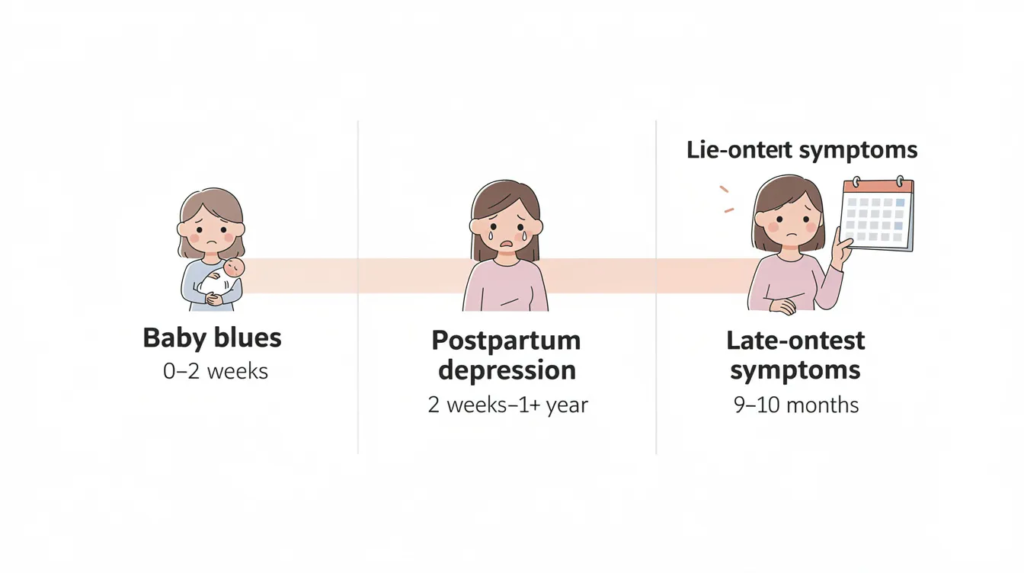
How long does postpartum depression last? For many women, the answer is longer than they expect. Baby blues usually fade within two weeks of giving birth, but postpartum depression can last several months after childbirth – and it can persist for a year or more if left untreated.
Postpartum depression affects up to 1 in 7 new mothers. Symptoms can develop within the first few weeks after childbirth, yet they may also begin during pregnancy or emerge many months after a child’s birth. Research from the 2019 PRAMS survey found that 7.2% of mothers still reported postpartum depressive symptoms at 9–10 months postpartum – and more than half of them had no earlier symptoms at all.
Here’s what matters most: postpartum depression is a clinical condition, distinctly different from the “baby blues.” It’s treatable, it’s common, and experiencing it says nothing about who you are as a parent. Recognizing postpartum depression signs early can make a meaningful difference in recovery. This guide walks through timelines, symptoms, risk factors, and treatment options so you know exactly what to expect and when to seek treatment.
At Texas Counseling Center, we support mothers and partners across Houston, Dallas, and all of Texas through in-person and telehealth therapy for perinatal depression and related mental health conditions.

5. Baby Blues vs. Postpartum Depression vs. Postpartum Psychosis
Not all postpartum mood changes are the same. Understanding the differences between postpartum blues, postpartum depression, and postpartum psychosis helps you figure out whether what you’re feeling is expected – or a signal that you need support.
5.1 Baby Blues: What to Expect and How Long They Last
Up to 70–80% of new mothers experience baby blues in the first few weeks after delivery. This is the most common postpartum mood shift, and it typically resolves without any formal treatment.
Hallmark symptoms include:
- Crying spells and tearfulness for no apparent reason
- Emotional sensitivity and feeling overwhelmed
- Mild mood swings and irritability
- Mild anxiety about parenting
- Still able to enjoy and care for your new baby at times
Postpartum blues usually appear within 2–3 days after giving birth and fade by 10–14 days. Supportive rest, help with everyday tasks, and reassurance from family are usually sufficient. No diagnosis or antidepressant medications are needed.
However, if you’re still feeling sad or anxious beyond those two weeks, it’s worth tracking your symptoms closely. Seeking help from a health care provider is important if symptoms persist beyond two weeks, because that’s often where baby blues end and postpartum depression begins.
5.2 Postpartum Depression: More Than “Just Hormones”
Postpartum depression is a mental health condition – not a personal failure. Hormonal changes after childbirth can trigger postpartum depression, but environmental and emotional factors can also lead to it, including sleep deprivation, relationship stress, and a lack of support.
Symptoms of postpartum depression are more severe than baby blues, last longer than two weeks, and interfere significantly with daily functioning and bonding. A new mother with postpartum depression might feel unable to complete everyday tasks, experience extreme sadness or numbness, lose interest in things she previously enjoyed, or struggle with persistent feelings of emptiness and dread. Fatigue is a common symptom of postpartum depression that goes far beyond normal newborn tiredness.
Symptoms may begin within the first few weeks after birth, but they can also appear in late pregnancy or many months into the postpartum period. Without appropriate treatment, postpartum depression can last for many months, a year, or longer. Postpartum depression can cause feelings of hopelessness and anxiety that feel unshakable – but they aren’t permanent with the right help.
5.3 Postpartum Psychosis: An Emergency
Postpartum psychosis is rare, affecting roughly 1–2 women per 1,000 births, but it’s extremely serious. Distinguishing symptoms include:
- Hallucinations (seeing or hearing things that aren’t there)
- Delusions (fixed false beliefs)
- Severe mood swings and extreme agitation
- Confusion and disorganized behavior
- Obsessive thoughts or baby recurrent thoughts that feel frightening
Onset is typically within the first week after delivery, though it can appear anytime in the first month. Postpartum psychosis requires immediate treatment – often hospitalization – to keep parent and baby safe. If you or someone you know shows these signs, call 911 or go to the nearest emergency room. Do not wait to see if symptoms improve on their own.
6. How Long Does Postpartum Depression Usually Last?
Postpartum depression typically starts around six weeks postpartum, though symptoms can develop up to one year after giving birth. Late-onset cases are more common than many people realize – CDC data shows that about 7% of mothers first reported symptoms at 9–10 months postpartum.
Here’s what the research tells us about duration:
- With early, appropriate treatment, many parents feel significantly better within 3–6 months
- Without treatment, one study found a mean time to remission of about 49 weeks – nearly a full year
- Only about 30% of women in that study were in remission by 6 months; roughly 66% by 12 months
- A National Institute of Health study found that 5% of women experience high postpartum depression symptoms for up to three years after giving birth
- Up to 30% of women report symptoms lasting over 3 years when they never received adequate care
There is no fixed expiration date for postpartum depression. Factors influencing postpartum depression duration include medical history, treatment timing, severity, and the quality of support around you. The key takeaway: early intervention in postpartum depression can shorten the recovery period substantially.
7. What Affects How Long Postpartum Depression Lasts?
Several risk factors and lifestyle factors influence not just whether you develop postpartum depression, but how long it sticks around.
Mental health history:
- A history of major depression increases postpartum depression risk and duration
- Family history of depression or other mental disorders raises your baseline vulnerability
- A previous pregnancy with depression strongly predicts developing postpartum depression again (PRAMS data showed a prevalence ratio of about 4.03)
Biological and pregnancy-related factors:
- Sudden changes in hormones after delivery
- Complications during pregnancy or birth, NICU stays, or chronic pain
- Breastfeeding difficulties or sleep deprivation – even small improvements in sleep can shift mood
Social and environmental factors:
- Limited support system, relationship conflict, or financial stress
- Severe socioeconomic stressors can extend the timeline of postpartum depression symptoms
- Social support networks can buffer against postpartum depression symptoms
- Culturally based stigma, lack of childcare, or transportation barriers that delay treatment
Co-occurring conditions:
- Postpartum anxiety amplifies and prolongs depression
- Substance use (smoking, heavy alcohol, marijuana) is associated with higher risk of persistent symptoms
Early access to a mental health provider – through therapy, medication management, or telehealth – often shortens how long postpartum depression lasts and prevents it from becoming chronic.
8. Symptoms of Postpartum Depression You Shouldn’t Ignore
Recognizing symptoms early can change how long postpartum depression lasts. Persistent sadness and emotional distress are common signs of postpartum depression, but the full picture includes multiple domains.
Emotional symptoms:
- Feeling sad, hopeless, or worthless for weeks at a time
- Emotional attachment to the baby feels weak or absent
- Frequent headaches, stomach problems, or unexplained physical pain
- Severe mood swings that feel disproportionate
Cognitive symptoms:
- Trouble concentrating or making decisions
- Excessive guilt or shame about parenting
- Baby thinking – constant, intrusive worries about the baby’s safety
Physical and behavioral symptoms:
- Inability to complete everyday tasks or care for your baby
- Changes in appetite or weight
- Insomnia or oversleeping despite exhaustion
Relational symptoms:
- Feeling disconnected from or afraid to be alone with the baby
- Withdrawing from partner, friends, or family
Warning signs that require immediate help:
- Suicidal thoughts or thoughts of self-harm
- Thoughts of harming the baby
- Feeling like your family would be better off without you
If you recognize the following symptoms in yourself or someone you love, it’s time to reach out. Many women hesitate, but most patients respond well to postpartum depression treatment when they seek it.

9. Postpartum Depression in Partners and Non-Birthing Parents
Postpartum depression is not limited to the birthing parent. About 1 in 10 partners – fathers and non-birthing parents – experience depression or postpartum anxiety in the first 3–6 months after a baby arrives.
Common symptoms in partners include irritability, withdrawal, increased work hours to avoid home, sudden changes in sleep or appetite, increased substance use, and feeling numb or overwhelmed. The increased risk is higher when the birthing parent also has postpartum depression, there’s financial pressure, or the partner has a history of depression.
Paternal or partner postpartum depression can last months to years if unaddressed. It affects the couple’s relationship and can impact the child’s language development and emotional attachment over time. Partners in Texas deserve support too – through individual therapy or relationship and couples counseling.

10. When Postpartum Symptoms Become an Emergency
Some postpartum symptoms demand same-day action. If you or someone you know is experiencing any of these, treat it as a medical emergency:
- Active suicidal thoughts or a plan to end your life
- Thoughts of harming or being unable to care for your baby
- Hallucinations, delusions, or severe paranoia (signs of postpartum psychosis)
- Total inability to function or care for yourself
Steps to take immediately:
- Call 911 or go to the nearest Texas emergency room
- Contact the crisis lifeline: call or text 988 (the 988 Suicide & Crisis Lifeline is available 24/7)
- Reach out to Postpartum Support International at 1-800-944-4773 for peer support and referrals
- Ask a partner or family member to stay with you and the baby
Postpartum mental health crises are medical emergencies – not moral failures. Seeking help protects both you and your child.
11. Treatment Options That Can Shorten Postpartum Depression
Evidence-based treatment can dramatically reduce how long postpartum depression lasts. Therapy or counseling can effectively treat postpartum depression, and combining it with medication is especially effective for moderate to severe cases. Here’s what’s available.
11.1 How Therapy Helps With Postpartum Depression
Talk therapy is a first-line treatment for many women experiencing postpartum depression. The American Psychiatric Association and the American College of Obstetricians and Gynecologists both recommend it.
- Cognitive behavioral therapy (CBT): Helps challenge negative beliefs like “I’m a bad mother” and reduces anxiety-driven behaviors
- Interpersonal therapy (IPT): Focuses on role transitions, relationship conflicts, and building social support during the shift to parenthood
- EMDR therapy: Particularly effective for clients who experienced traumatic deliveries, NICU stays, or prior trauma that intensifies postpartum symptoms
A mother who’s been depressed for 9 months can develop coping skills, establish stronger support groups, and see meaningful mood improvement within weeks to months of starting therapy. As referenced in research published in JAMA Psychiatry and the journal J Womens Health, structured therapy consistently shortens duration of major depression in the postpartum period.
11.2 Medication, Sleep, and Other Supports
A psychiatric provider or mental health provider can determine whether antidepressant medications are appropriate. Selective serotonin reuptake inhibitors are commonly prescribed for postpartum depression, and most antidepressants are compatible with breastfeeding – though this requires individualized medical guidance.
Brexanolone is a medication specifically approved for postpartum depression and represents a newer treatment avenue. Antidepressants are generally recommended for six to twelve months postpartum to prevent relapse, depending on how long symptoms lasted before treatment and prior mental health conditions.
Beyond medication, practical supports matter enormously:
- Sleep: Even a 4–5 hour uninterrupted block (through shared night feedings or pumping) can shift mood
- Support groups and peer connection through organizations like Postpartum Support International
- Gentle physical activity as cleared by your doctor
- Saying yes to help and no to nonessential commitments
At Texas Counseling Center, clients can access both therapy and medication management in one coordinated setting.
12. How Texas Counseling Center Can Help (Houston, Dallas & Telehealth Across Texas)
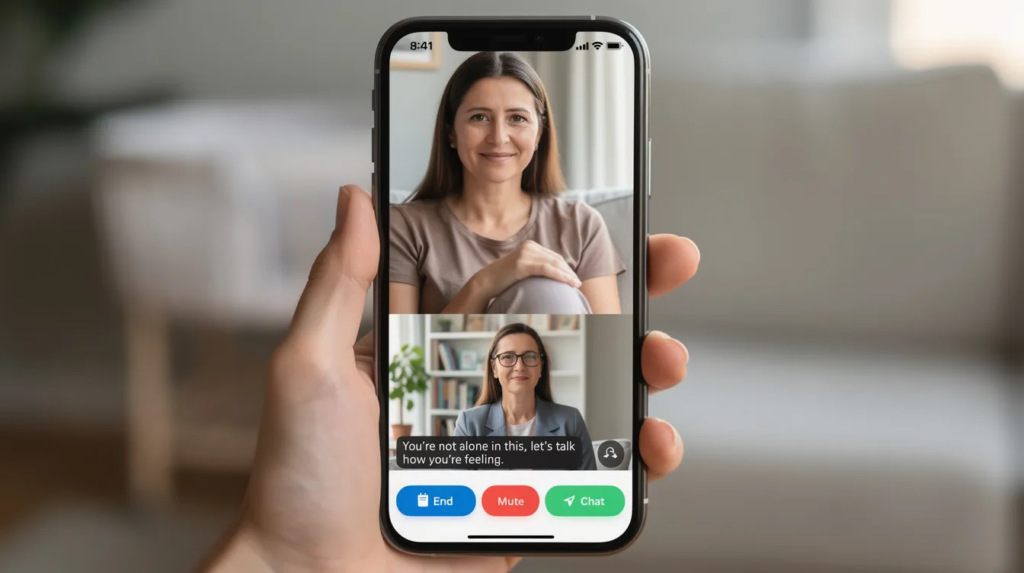
Texas Counseling Center is a mental health practice serving individuals, couples, and teens throughout Texas, with offices in greater Houston and Dallas plus telehealth appointments statewide.
For postpartum care specifically, we offer:
- Therapy for postpartum depression and postpartum anxiety
- Trauma counseling and EMDR for difficult births
- Medication management with licensed psychiatric providers
- Couples counseling for relationship strain after baby
We also provide ongoing mental health support beyond the postpartum period, including anxiety and depression treatment, ADHD and autism evaluations, teen therapy, and emotional support animal evaluations when clinically appropriate. Insurance-friendly options and secure video sessions make it possible to get help without leaving home with a newborn.
Reaching out early can shorten how long postpartum depression lasts – and prevent it from becoming a long-term struggle. Many moms experience postpartum challenges that respond to treatment. You don’t have to wait until it’s unbearable.
15. Getting Started: Your Next Step
Postpartum depression does not have to define your experience as a new mother – or as a partner. Untreated postpartum depression can stretch into months and years, but with the right support, most parents recover and enjoy their life with their new baby again.
If you’re in Houston, Dallas, or anywhere in Texas and you’re experiencing symptoms of depression that have lasted more than two weeks, we encourage you to contact Texas Counseling Center for a confidential consultation. You can call us directly, fill out our online appointment form, or request a telehealth visit that fits around your newborn’s schedule.
You deserve to feel like yourself again. Treat postpartum depression early, lean on the people and professionals around you, and take that first step today. Help is closer than you think.
Share