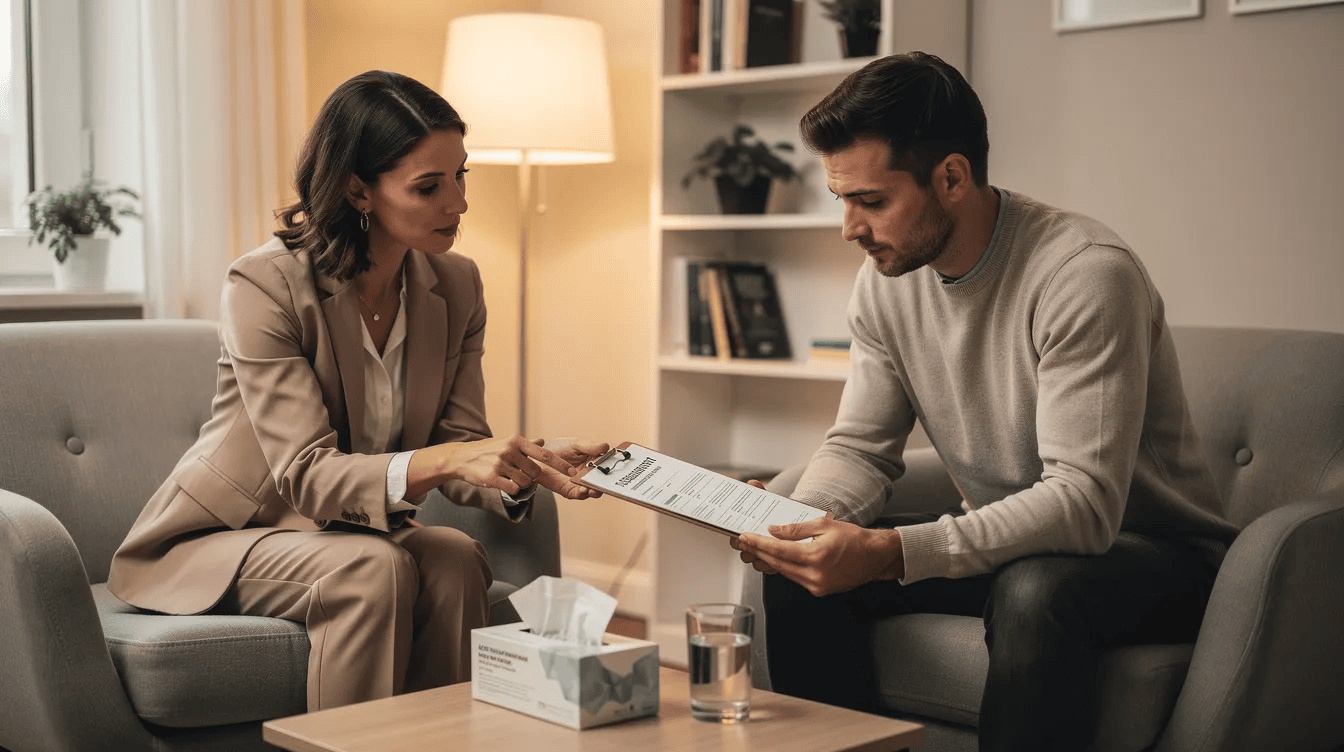



Is online therapy effective? It’s a fair question-and one that more Texans are asking than ever before. Since the COVID-19 pandemic forced a massive shift to telehealth in 2020 and 2021, millions of people tried therapy through a screen for the first time. What surprised many patients, therapists, and researchers alike is that the shift stuck. Online therapy services have continued growing through 2024, 2025, and into 2026.
For many common mental health concerns-anxiety, depression, trauma-related symptoms-online therapy can be equally effective as in person therapy when delivered by a licensed therapist using evidence-based methods. That’s not a marketing claim. It’s what the research consistently shows.
At Texas Counseling Center, we provide both in-person and online counseling from our Houston and Dallas locations, serving clients across Texas. We’ve watched firsthand how telehealth mental health services have changed who can access mental health support, and how. This article walks you through the evidence, the benefits, the potential drawbacks, and what it all means for you.

Is Online Therapy Effective? The Short Answer
Yes. For many people and many mental health conditions, online therapy is effective and often comparable to in-office care.
Here’s what backs that up:
- A 2022 meta-analysis published in the Journal of Affective Disorders found that video-based psychotherapy for depression produced outcomes nearly identical to in-person therapy, with an effect size (Hedges’ g) of just 0.04-meaning essentially no difference.
- 64% of users find online therapy equally effective as in-person therapy, and 21% of users reported online therapy was actually more effective than in-person sessions for their needs.
- The American Psychological Association recognizes the advantages of online therapy for increased accessibility, particularly for underserved populations.
That said, online therapy is not a universal solution. Individuals with severe symptoms-active psychosis, unstable bipolar disorder, or situations requiring immediate in person intervention-often need higher-intensity or in-clinic care. The sections below dig into what the science actually says, where online therapy shines, and where its limits are.
What the Research Shows (2018–2024 Studies)
The evidence base for online therapy has grown substantially. Here are the key findings worth knowing.
2018 meta-analysis on online CBT. A widely cited 2018 meta-analysis found online CBT effective for anxiety and depression, with outcomes matching traditional therapy. This was one of the first large-scale confirmations that structured, therapist-guided digital treatment could work as well as sitting across from a provider in an office.
2021 large-scale review. A meta-analysis combining 47 between-group and 56 within-group studies found that live video psychotherapy produced large, significant improvements in depression, anxiety, and post traumatic stress disorder symptoms. CBT delivered by video showed particularly strong within-group effect sizes (~1.34). Between video and in-person treatment, differences were negligible.
2022 depression-specific research. Across 9 randomized controlled trials with 1,268 patients, telehealth and face-to-face therapy produced no meaningful difference in depression severity post-treatment (SMD −0.04). Therapeutic alliance and patient satisfaction were also similar.
Broader conditions. A 2022 systematic review in JMIR Mental Health examined telehealth for less common mental health conditions across 12 RCTs and found no significant differences in symptom severity, functioning, or satisfaction compared to in-person care. Teletherapy is often used for treating depression, anxiety, and trauma, and patients using online therapy report similar satisfaction levels as in-person.
Gaps in the evidence. Over 88 online therapy platforms were analyzed for effectiveness in various reviews, yet most research focuses on mild to moderate conditions. Fewer studies address severe mental illness like schizophrenia, complex substance use disorders, or rapid-cycling bipolar disorder. Long-term follow-ups beyond 12 months remain limited, with some evidence that small differences may emerge over time.
How Online Therapy Works in Real Life
Online therapy is not one single thing. It’s a broad category, sometimes called teletherapy, that encompasses several formats and delivery methods.
Common formats include:
- Live video sessions (the most studied and most similar to in person therapy)
- Phone sessions (audio only)
- Secure messaging (asynchronous text communication)
- Blended models combining weekly video with between-session messaging or app-based exercises
Online therapy can involve individual, couples, or group sessions. It can be delivered via video, phone, or messaging depending on the provider and the client’s needs. Virtual therapy should always include real interaction with a qualified mental health professional, not just automated services or chatbots.
What a typical session looks like. Most telehealth counseling sessions follow the same 50-minute structure as in-office appointments: intake questions, goal-setting, therapeutic work, homework planning, and follow-up scheduling. At Texas Counseling Center, online sessions follow the same clinical standards as in person therapy, with added telehealth-specific guidelines for privacy and safety planning.
Platform vs. private practice. There’s an important difference between using a large national online therapy platform-like BetterHelp, which has over 30,000 licensed therapists available, or platforms like Online-Therapy.com where sign-up requires less than 10 minutes, or Brightside Health which connects users with therapists within three days-and working with a local practice like Texas Counseling Center. The quality of online therapy may vary between platforms and providers. Large platforms offer scale and speed; a local clinic offers continuity, clinical experience with your community, and seamless transitions between online and in-person care when needed.
Online Therapy vs In-Person Therapy: Key Differences
The core of therapy-a licensed clinician using evidence-based methods within a confidential relationship-stays the same regardless of format. But the experience does differ in meaningful ways.
What stays the same:
- Working with a licensed therapist who meets ethical standards and legal and ethical codes
- Evidence-based approaches like CBT, EMDR, and trauma-focused care
- Confidentiality protections and treatment planning
- The process of building trust, setting goals, and developing coping skills
What changes:
- Location: you’re in your own home or private space rather than a clinic
- Technology mediates the communication-video quality, audio lag, and screen fatigue are factors
- Full body language is partially limited (more on this below)
- Crisis response is different: online therapists cannot physically intervene and must coordinate with local emergency resources
Some people feel safer and more open during online sessions. Others feel disconnected and prefer the grounding effect of sitting with a therapist in a shared room. Neither preference is wrong. Texas Counseling Center offers both formats so clients can switch between or combine them based on comfort and clinical need.
Conditions Online Therapy Treats Well – and When In-Person Is Better
Online therapy’s effectiveness depends on the problem, the person, and the setting. It is not all-or-nothing.
Conditions with strong evidence for online therapy:
- Mild to moderate depression
- Generalized anxiety disorder
- Social anxiety and panic attacks
- Many trauma-related symptoms and post traumatic stress disorder
- Relationship or communication issues
Populations that often benefit from online services:
- Busy professionals and parents managing childcare
- College students
- Teens comfortable with screens
- People in rural Texas areas with few local providers
- Individuals with mobility challenges or transportation barriers
When in person therapy is often recommended:
- Active suicidal ideation or recent suicide attempts
- Suicidal thoughts with a specific plan or access to means
- Severe self-harm behaviors
- Psychosis or unstable bipolar disorder
- Cases requiring close monitoring or more intensive support
Individuals with severe mental health conditions may benefit more from in-person therapy where a provider can observe the full picture and respond immediately. Online therapy may not be suitable for individuals facing acute mental health crises.
At Texas Counseling Center, clinicians can help assess whether a client is a good fit for online counseling or should start with in-person depression and anxiety counseling, especially across our Houston and Dallas metro locations.
Most Online Therapy Is CBT – What That Means for You
A large share of online therapy research focuses on cognitive behavioral therapy, often referred to as online CBT. There’s a reason: CBT’s structured format translates well to digital delivery.
CBT focuses on how thoughts, feelings, and behaviors interact. Sessions typically include skills practice, worksheets, and between-session homework-all of which can be shared on screen, tracked through patient portals, or completed digitally. Online cognitive behavioral therapy is as effective as in-person therapy across multiple studies and other types of structured treatment approaches.
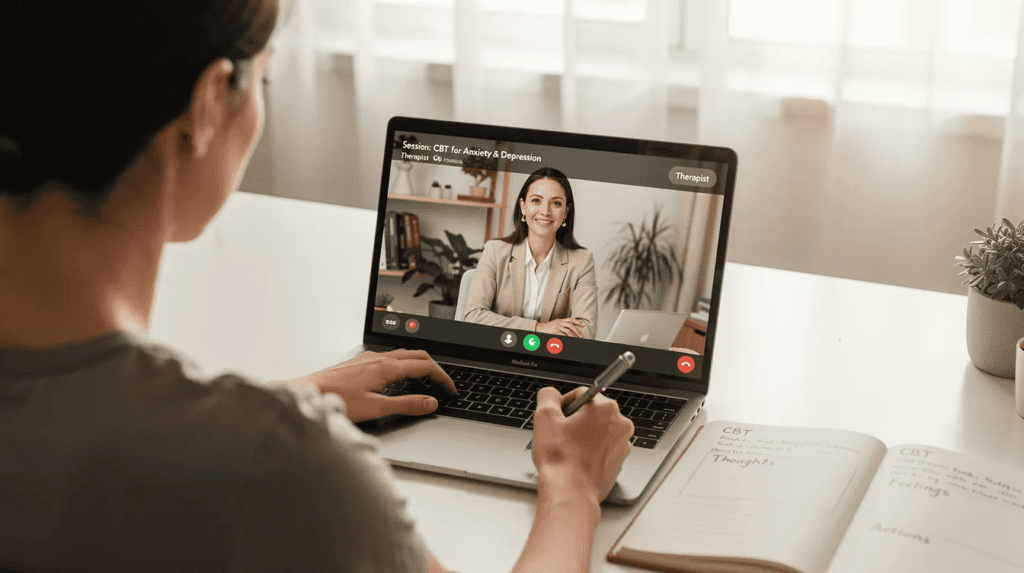
In the 2021 meta-analysis, CBT delivered by video showed a within-group effect size of approximately 1.34-a large and clinically significant result. For many patients with anxiety or depression, 12 to 20 weekly CBT sessions can substantially reduce symptoms, whether those sessions happen online or in a therapist’s office.
At Texas Counseling Center, clinicians use CBT alongside EMDR treatment, trauma-focused therapies, and other methods-both in person and via telehealth. The approach depends on what the client’s mental health concerns require, not on which format they’re using.
Pros of Online Therapy: Convenience, Access, and Comfort
Many patients stick with online counseling because the benefits genuinely fit their lives. Here’s what the research and our clinical experience consistently highlight.
Convenience. No commute across Houston or Dallas traffic. Easier scheduling during lunch breaks or evenings. Online therapy provides flexible scheduling which can help maintain regular appointments-and many clients find their attendance improves as a result.
Access. Online therapy offers access to remote areas with few providers. It eliminates geographical barriers to access mental health services, which is especially helpful in rural East Texas or smaller towns far from a metro area. Online therapy is accessible for individuals in remote areas who might otherwise go without mental health care.
Emotional comfort. Some clients open up more from their own home, reducing the stigma associated with walking into a clinic. Online therapy can help reduce stigma associated with seeking mental health support, making it feel more approachable for people receiving therapy for the first time.
Cost savings. Online therapy can offer cost savings by reducing travel-related expenses-no gas, no parking fees, less time off work. Online therapy can also be more affordable due to lower overhead costs for some providers, and the resources saved on commuting add up over months of treatment.
Cons and Limitations: When Online Therapy Falls Short
Online therapy is effective, but it comes with real limitations that are worth discussing honestly.
Technology issues. Technical issues can disrupt online therapy sessions, impacting their effectiveness. Unstable internet, frozen video, or audio lag during a sensitive moment can break the flow of a session. Finding a quiet, private space can be a challenge for clients in online therapy, especially in crowded households.
Crisis response. Online therapy may lack immediate crisis response capabilities. If a client is in danger, the therapist cannot physically intervene and must rely on local emergency services. This is why many clinicians recommend in person intervention for clients with active suicidal thoughts or severe symptoms. If you or someone you know is in crisis, contact the 988 Suicide & Crisis Lifeline immediately.
Clinical limitations. Severe substance use disorders, psychosis, or complex medical-psychiatric combinations often require more intensive in person treatment and psychiatry support that goes beyond what a video session can offer.
Subtler drawbacks. Less access to full body language cues, “Zoom fatigue” after long screen time, and the simple fact that some people feel more connected sitting in a shared physical room. Emotional connection can sometimes be more difficult to establish in online therapy than in-person, particularly for clients who are new to the process.
Legal, Licensing, and Privacy Issues You Should Know
Telehealth must follow all the same legal and ethical rules as in-person therapy-plus a few extras specific to technology.
State licensing. Most online therapists must be licensed in the state where the client is physically located. Under Texas Behavioral Health Executive Council rules, out of state providers cannot treat Texas clients unless they hold a Texas license. This means if you’re sitting in Houston, your therapist needs a Texas license regardless of where they are located.
Privacy and security. Federal HIPAA rules require telehealth platforms to use encrypted, compliant technology. Providers must enter business associate agreements with tech vendors, and patients receive privacy protections similar to in-person care. Texas regulations also require informed consent for telehealth that covers risks, emergency procedures, and record keeping.

Texas Counseling Center uses secure, HIPAA-compliant systems and reviews client location at the start of each session to stay within Texas law. Clients should always feel free to discuss platform security, data storage, and who can access their records with their provider.
Online Therapy and Body Language: Does It Hurt the Connection?
A common worry: “Will my therapist really understand me if they can’t see my full body language?”
It’s a valid concern. Video sessions still allow therapists to read many nonverbal cues-facial expressions, tone of voice, pacing of speech, and upper body posture are all visible and helpful. Psychologists trained in teletherapy learn to pay close attention to these signals and ask more explicit questions about physical sensations and emotional states.
What can be missed? Subtle fidgeting off-camera, leg bouncing, or full-room dynamics that a therapist might notice in an office. These are real losses, but they don’t appear to undermine therapy outcomes for most people. Research consistently shows that a strong therapeutic alliance is crucial for the effectiveness of therapy regardless of delivery method-and that alliance forms reliably over video when sessions are consistent and the therapist is attentive.
If you’re in online sessions, being more explicit about how you feel physically and emotionally can partly compensate for any reduced visibility. Tell your therapist when something feels off in your body, even if they can’t see it.
Who Is a Good Candidate for Online Therapy?
The effectiveness of online therapy can depend on the client’s comfort with technology, their living situation, and the nature of their mental health issues.
Good candidates generally:
- Can find a private space for sessions
- Are comfortable with basic video technology
- Are dealing with mild to moderate mental health challenges
- Can engage verbally and are willing to do between-session work
Groups that often benefit:
- Teens who are used to screens (learn more about teen therapy options)
- College students managing busy schedules
- Parents with childcare duties
- Professionals in Houston or Dallas who want to avoid long commutes
- Anyone in a therapy desert with limited local resources
Red flags suggesting in-person or higher care:
- Recent suicide attempt or frequent dissociation
- Severe mania or repeated crises requiring emergency room visits
- Situations where a therapist needs to observe the full environment for safety
At Texas Counseling Center, clinicians assess fit for online vs in-person during the initial evaluation and can adjust the plan as needs change. Many patients start one way and shift as their treatment progresses.
How to Choose Between Online and In-Person Therapy in Texas
There is no single right choice. Many clients use a hybrid model over time, and that flexibility is a strength.
Questions to ask yourself:
- How tight is my schedule, and how far is the nearest clinic?
- Am I comfortable on video, or do I strongly prefer face-to-face?
- How severe are my current symptoms?
- Do I have a private, quiet space at home?
- Am I in crisis, or am I looking for ongoing support and skill-building?
A few scenarios:
- A busy Houston professional with mild anxiety and limited free time chooses online therapy for weekly sessions during lunch. The convenience keeps them consistent.
- A trauma survivor in Dallas prefers starting EMDR in-clinic to establish safety and grounding, then transitions to online for later processing phases where sessions are less intensive.
- A parent in rural East Texas, hours from the nearest mental health professional, uses telehealth to access weekly counseling services that simply wouldn’t be available locally.
Texas Counseling Center offers flexibility across multiple locations and telehealth, so clients are never locked into one format.
What to Expect in Your First Online Therapy Session
Starting therapy can feel uncertain. Knowing what to expect takes some of the pressure off.
Before the session:
- Test your internet connection and camera
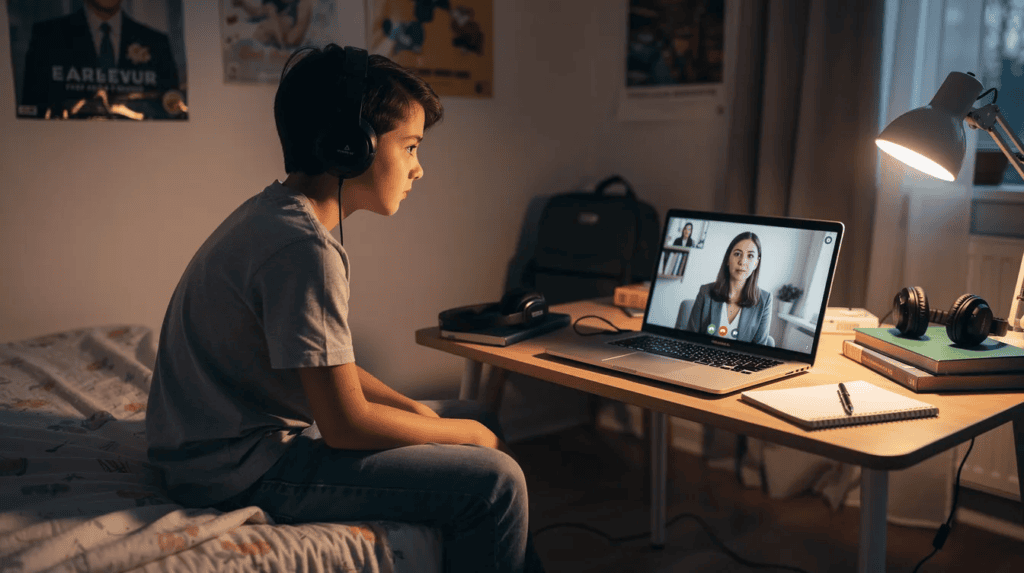
- Find a quiet, private room where you won’t be interrupted
- Use headphones for added privacy
- Have a notebook, tissue, and water nearby
- Log in a few minutes early-you may see verification screens (some platforms display messages like “je verzoek wordt geverifieerd” or “een paar seconden doorgaan” if your browser language differs; simply wait, and vernieuw deze pagina niet unless instructed)
During your first session:
Your therapist will review informed consent and telehealth policies, confirm your physical location in Texas, and discuss your goals and history. Together, you’ll co-create a starting plan. If you’re doing online CBT or talk therapy, the first one to three sessions typically focus on building rapport and understanding what you want from treatment. Your therapist will also check in about how the online format feels for you.
Texas Counseling Center support staff can help clients set up the telehealth platform before their first appointment if needed-just reach out ahead of time.
Costs, Insurance, and Access for Online Therapy in Texas
Cost and insurance coverage are among the most common concerns affecting whether people commit to therapy.
Insurance coverage. Many states require insurance to cover online therapy, and most major Texas insurers now cover online therapy sessions similarly to in-person care, especially after the 2020 telehealth expansions. Insurance coverage for online therapy varies by state and provider, so always confirm with your specific plan. Medicare Part B covers online therapy services as well.
Platform pricing vs. local clinic billing. Large online therapy platforms often use subscription models. For example, Talkspace allows users to check insurance coverage before sign-up, with copays that can be as low as $15 per session. Grow Therapy partners with over 125 insurance providers nationwide. Thriveworks accepts over 300 insurance plans for therapy. These platforms serve a different niche than a local clinic that bills your insurance company per session and provides continuity with the same therapist over time.
Texas Counseling Center and insurance. We work with many major health insurance plans for both in-person and telehealth visits and can verify benefits before a client starts. If you don’t accept insurance or are paying out of pocket, ask about sliding scale options, session frequency, and shorter-term goal-focused therapies like CBT to manage costs.
How Texas Counseling Center Uses Online Therapy Safely and Effectively
At Texas Counseling Center, our approach to online therapy services is grounded in clinical experience, safety, and flexibility.
Our standards:
- All online therapists are licensed in Texas and trained in telehealth best practices, including crisis planning and privacy protocols
- We verify client location each session and create safety plans for higher-risk clients
- We coordinate care with primary care providers or medication management when needed
Services available both online and in-person:
- Anxiety and depression treatment
- Trauma counseling and EMDR therapy
- Relationship and marital counseling
- Teen therapy
- ADHD evaluations and autism testing (note: some evaluation components may require in-person visits)
Clients can start online, switch to in-person at one of our Houston or Dallas offices, or maintain a flexible mix over time. The goal is always the same: effective, personalized mental health care that fits your life.
Ready to See If Online Therapy Is Right for You?
The question isn’t really whether online therapy works. The research is clear that it does-for many people, for many conditions, and with outcomes that match traditional therapy. The real question is whether it’s the right fit for you, right now.
The first step can be as simple as a telehealth intake session where you and a therapist decide together whether online therapy, in person therapy, or a combination makes the most sense.
Texas Counseling Center serves clients across Texas via secure telehealth and in offices throughout the greater Houston and Dallas metro areas. Contact us to schedule your first appointment, verify your insurance, or simply ask questions. We’re here to help you find the right support-on your terms.
Share